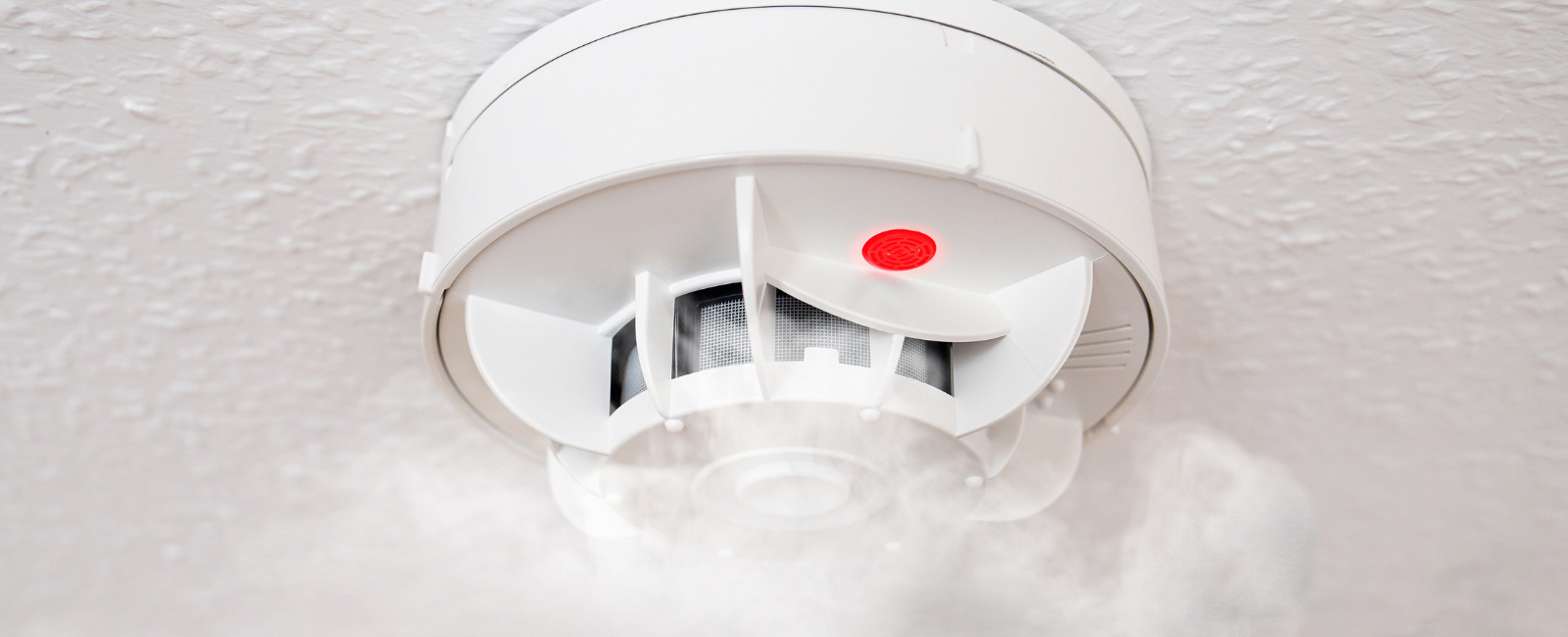
Smoke detection systems, design and products.
The incipient stage of smoldering fires provides the widest window of opportunity to detect and control the spread of fire. Smoke detectors can be configured to generate multiple alarms within this window, to provide the time needed to help minimize or prevent fire loss. Let Koetter Fire Protection keep your building safe and secure with a complete fire and smoke detection system designed to follow NFPA 72 standards.
- Detection Performance with vastly better sensitivity and faster response time.
- Detection Reliability for operating temperature stability, while minimizing nuisance alarms.
- Consistent Performance Over Time , even during long term exposure to dust.
- Efficiency of Operation with lower power consumption per unit area.
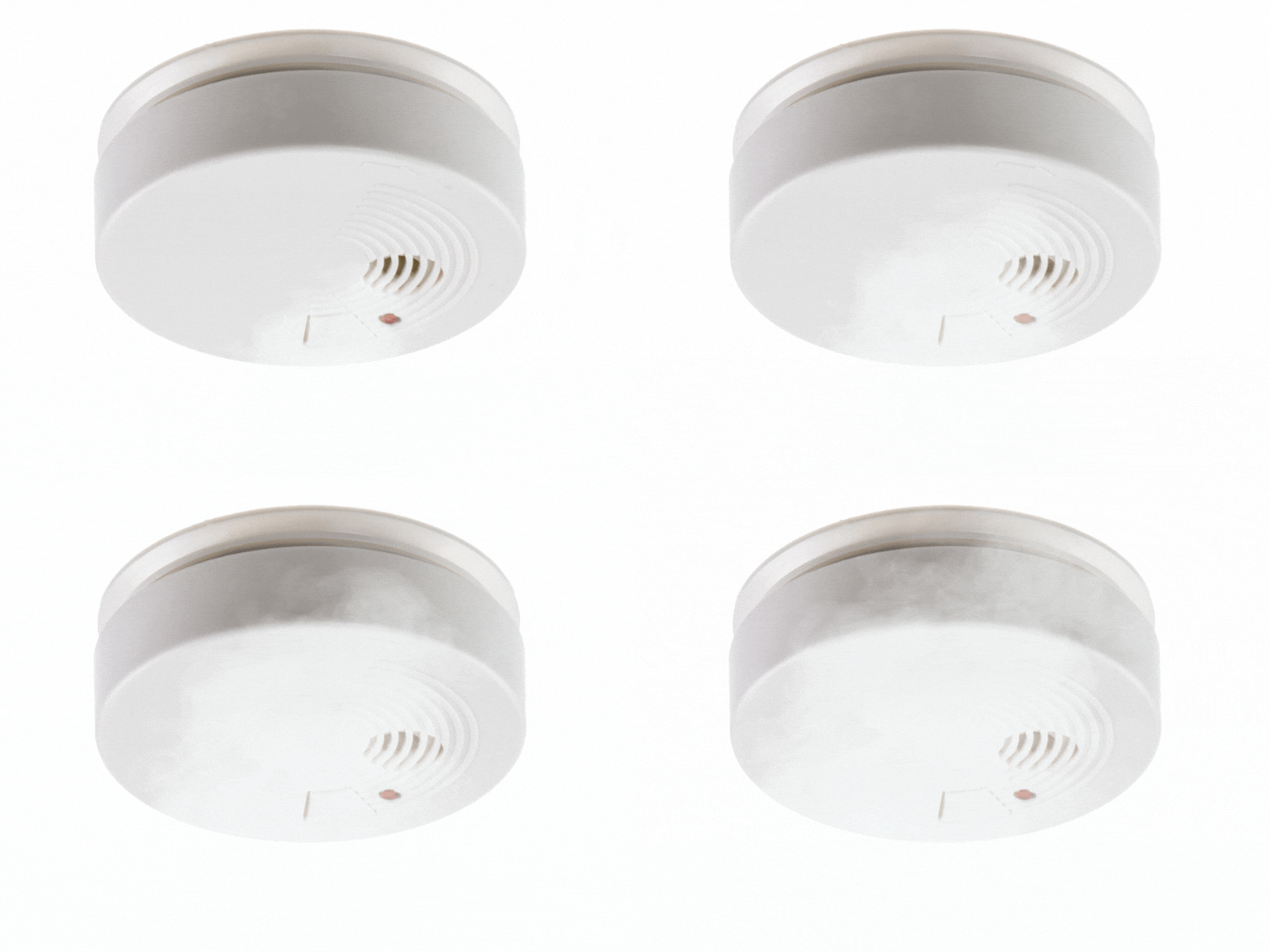
Smoke detection system design, installation and maintenance.
Koetter Fire specializes in high-quality smoke detection system design, installation and repairs. You can count on Koetter Fire Protection’s exceptional design strength to give you a well-conceived system and to smooth the overall process. As needed, we coordinate our efforts with your architect/engineering firm, as well as your general, electrical, and/or mechanical contractor. Our knowledgeable design teams are experts at coordinating the installation with other trades on the project to ensure smooth performance and on-time completion.
Products We Trust